
- 0
- 1,287 word
The very first time I searched how to clean stainless steel, it was after I confidently wiped my refrigerator with a random spray and somehow made it look worse. Instead of shiny, it looked cloudy. Fingerprints multiplied. I stood there wondering how something sold as “low maintenance” could be so unforgiving.
That experience pushed me to actually learn how to clean stainless steel properly instead of guessing. After years of trial, error, and real-life routines, I finally found what works and what absolutely does not.
Core Rules You Must Follow to Clean Stainless Steel Safely
Before diving into surface-specific methods, there are a few universal rules that apply to every situation where you clean stainless steel. Stainless steel has a visible grain, similar to wood, that runs in one direction. Always wiping with the grain prevents streaks and tiny scratches that trap dirt.
Avoid harsh tools at all costs. Steel wool, abrasive pads, and stiff brushes permanently scratch stainless steel. Certain chemicals like bleach, ammonia, and standard glass cleaners can damage the protective layer and should never be used unless labeled safe. Understanding these rules is essential if you want to master cleaning stainless steel without damage.
Cleaning Stainless Steel Appliances the Right Way
Daily care is the easiest way to keep appliances looking new.

Daily Maintenance for Stainless Steel Appliances
Using a microfiber cloth lightly dampened with warm water removes fingerprints before oils settle into the surface. This simple habit reduces the need for deep cleaning later. When you consistently follow this routine, cleaning stainless steel appliances becomes effortless instead of frustrating.
Removing Grease and Grime from Appliances
For grease buildup, mix a few drops of mild dish soap with warm water. Apply using a microfiber cloth and wipe with the grain. Rinse with a clean damp cloth and dry immediately to prevent water spots.
Drying is not optional. Moisture left behind creates streaks and mineral marks. Proper drying is one of the most overlooked steps when people learn how to clean stainless steel appliances.
Polishing and Fingerprint Control
For extra shine, apply a few drops of olive oil or mineral oil to a cloth and buff with the grain. Always use a second dry cloth to remove excess oil so it does not attract dust. For stubborn fingerprints, a microfiber cloth dampened with a one-to-one mix of water and 70 percent isopropyl alcohol removes oils cleanly without residue.
Cleaning Stainless Steel Sinks for Deep Cleaning
Tips to follow when cleaning your stainless steel sinks for that lasting shine:

Daily Sink Cleaning Routine
For everyday sink cleaning, dish soap and a non-scratch sponge remove food residue without harming the finish. Rinse thoroughly and dry with a towel to prevent water spots from forming.
This small step makes a huge difference in how your sink looks over time and is a key part of cleaning sinks properly.
Deep Cleaning and Stain Removal
For deeper cleaning, use a cleaner like Bar Keepers Friend occasionally. Apply it, let it sit for about ten minutes, scrub gently with the grain, then rinse and dry completely. This restores brightness without scratching when used correctly.
For rust spots or tough stains, create a baking soda and water paste. Rub it gently into the area following the grain, rinse, and dry thoroughly.
Removing Water Spots from Stainless Steel Sinks
Water spots come from minerals left behind after air drying. White vinegar dissolves these deposits effectively. Wipe the sink with vinegar, then dry immediately to avoid new spots. Drying is essential when mastering how to clean stainless steel sinks.
Cleaning Stainless Steel Cookware Without Ruining It
Follow these methods for cleaning your stainless steel cookware:
Removing Stuck-On Food from Pans
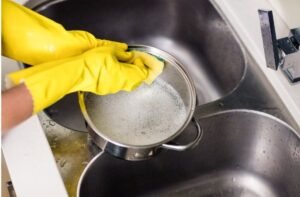
Stainless steel cookware needs patience, not force. Soak the cooled pan in warm, soapy water for fifteen minutes to loosen food residue. This allows gentle scrubbing without scratching.
For stubborn messes, boil water with two to three tablespoons of baking soda in the pan for ten minutes. Let it cool slightly, then scrub with a non-abrasive sponge.
Fixing Rainbow Discoloration and Burn Marks
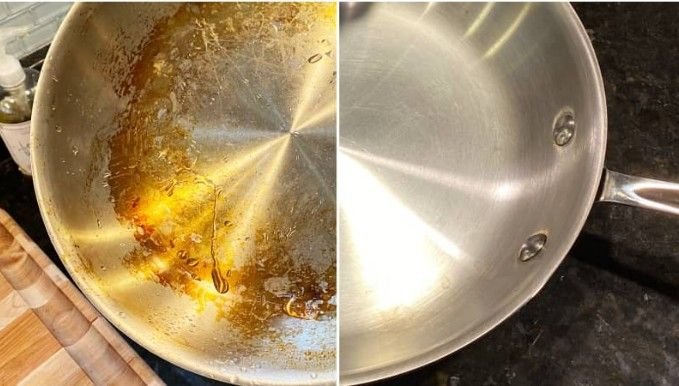
Rainbow discoloration appears when pans overheat. Wipe the surface with a one-to-one mix of water and white vinegar to restore the original finish. For burnt food, apply a baking soda paste, let it sit for ten minutes, then scrub gently.
Understanding how to clean stainless steel cookware extends its lifespan and keeps cooking performance consistent.
How to Clean Stainless Steel Step by Step for Best Results

Start by wiping away loose dust or crumbs with a dry microfiber cloth to avoid scratching. Dampen a clean cloth with warm water and add mild dish soap if grease is present. Wipe the surface with the grain using steady strokes.
Rinse the cloth with clean water and wipe again to remove soap residue. Dry the surface immediately with a clean towel, still following the grain. If desired, apply a drop of oil to a cloth and buff lightly, then remove excess with a second dry cloth. This step-by-step routine works across appliances, sinks, and cookware with minor adjustments.
Recommended Supplies to Clean Stainless Steel Safely
Using the right supplies makes learning how to clean stainless steel much easier. Microfiber cloths trap oils without scratching. Non-scratch sponges provide gentle scrubbing power. Spray bottles help control how much cleaner you use.
Effective cleaners include mild dish soap, white vinegar, baking soda, club soda, and specialty products like Weiman Stainless Steel Cleaner. Simple tools and consistent methods beat harsh chemicals every time.
Frequently Asked Questions
1. Can olive oil really polish stainless steel safely?
Yes, olive oil works well as an occasional polish. It fills tiny surface grooves and helps repel fingerprints. Use only a few drops and always buff off excess. Too much oil attracts dust and leaves a greasy feel. Monthly polishing works best.
2. Does vinegar damage stainless steel over time?
Vinegar is safe when used briefly and wiped dry. It removes fingerprints and mineral deposits effectively. Do not let vinegar sit for long periods or soak stainless steel. Always rinse or wipe with water and dry thoroughly afterward.
3. Why does stainless steel look cloudy after cleaning?
Cloudiness usually comes from residue or wiping against the grain. Too much cleaner leaves buildup that reflects light unevenly. A warm water wipe followed by thorough drying often restores clarity. Light polishing can also help.
4. How often should I clean stainless steel surfaces?
Light daily wiping keeps fingerprints from building up. Weekly deeper cleaning maintains shine. Monthly polishing helps reduce future smudges. Consistency is the secret to mastering how to clean stainless steel easily.
Final Takeaways
Once you truly understand how to clean stainless steel, it stops feeling intimidating and starts feeling manageable. Stainless steel responds best to gentle, consistent care rather than aggressive scrubbing. Respect the grain, avoid harsh tools, and always dry thoroughly.
My biggest takeaway from years of cleaning stainless steel is simple. Clean lightly and often instead of waiting for buildup. With the right habits, cleaning stainless steel becomes second nature, and the shine takes care of itself.
Author

admin@livehappyinspired.com
Related Posts

Common Mistakes New String Students Make When Choosing Accessories
- 0
- 684 words
Playing the stringed instrument is more than just holding on to the bow and the strings. The accessories have an impact on...
Read out all
5 Moving Day Mistakes Homeowners Regret
- 0
- 827 words
Moving into a new home should feel like a fresh start, a celebratory milestone marking the next chapter of your life. Instead,...
Read out all
How to Make the Most of a Small Bedroom?
- 0
- 721 words
Living in a compact space does not mean you have to sacrifice style, comfort, or functionality. In fact, small bedrooms present a...
Read out all
How to Create a Peaceful Escape Without Traveling
- 0
- 859 words
The modern world operates at an intense pace. Between professional responsibilities, digital notifications, and daily logistics, the mind accumulates low-level stress that...
Read out all
Why Property Condition Matters for a VA Loan
- 0
- 1,192 word
When buying a home with a VA loan, the property’s condition matters just as much as its price. A home may look...
Read out all
Affordable Conveyancing Solutions for Budget-Friendly Property Transactions
- 0
- 1,123 word
Conveyancing is a crucial part of any property transaction, involving the legal process of transferring ownership from one party to another. However,...
Read out all